Sunday, June 15, 2014

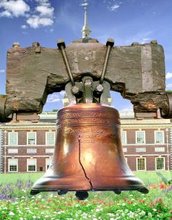
Happy 238th Birthday America
Independence Day events since birth

On July 4, 1776, the Second Continental Congress unanimously adopted the Declaration of Independence, announcing the colonies' separation from Great Britain. The Constitution provides the legal and governmental framework for the United States, however, the Declaration, with its eloquent assertion "all Men are created equal," is equally beloved by the American people.
 
Philadelphia marked the first anniversary of American independence with a spontaneous celebration, which is described in a letter by John Adams to Abigail Adams. However, observing Independence Day only became commonplace after the War of 1812. Soon, events such as groundbreaking ceremonies for the Erie Canal and the Baltimore and Ohio Railroad were scheduled to coincide with July 4th festivities.

In 1859, the Banneker Institute of Philadelphia, Pennsylvania, urged African Americans to celebrate Independence Day while bearing witness to the inconsistencies between the ideals espoused in the Declaration of Independence and the practice of slavery. Banneker's orator of the day, Mr. Jacob C. White Jr., also promised his audience a brighter future:
We have learned by experience and by the comparison of ourselves with people similarly situated, to hope that, at some day not very far in futurity, our grievances will be redressed, that our long lost rights will be restored to us, and that, in the full stature of men, we will stand up, and with our once cruel opponents and oppressors rejoice in the Declaration of our common country, and hail with them the approach of the glorious natal day of the Great Republic.
By the 1870s, the Fourth of July was the most important secular holiday on the calendar. Congress passed a law making Independence Day a federal holiday on June 28, 1870. Even far-flung communities on the western frontier managed to congregate on Independence Day. In an American Life Histories: Manuscripts from the Federal Writers' Project, 1936-1940 interview, Miss Nettie Spencer remembered the Fourth as the big event of the year. Everyone in the countryside got together on that day for the only time in the year. She continued,
There would be floats in the morning and the one that got the [girls] eye was the Goddess of Liberty. She was supposed to be the most wholesome and prettiest girl in the countryside — if she wasn't she had friends who thought she was. But the rest of us weren't always in agreement on that…Following the float would be the Oregon Agricultural College cadets, and some kind of a band. Sometimes there would be political effigies.

Just before lunch - and we'd always hold lunch up for an hour - some Senator or lawyer would speak. These speeches always had one pattern. First the speaker would challenge England to a fight and berate the King and say that he was a skunk. This was known as twisting the lion's tail. Then the next theme was that any one could find freedom and liberty on our shores. The speaker would invite those who were heavy laden in other lands to come to us and find peace. The speeches were pretty fiery and by that time the men who drank got into fights and called each other Englishmen. In the afternoon we had what we called the 'plug uglies' " funny floats and clowns who took off on the political subjects of the day." The Fourth was the day of the year that really counted then. Christmas wasn't much; a Church tree or something, but no one twisted the lion's tail.
Down South the celebration was much the same. Ninety-six-year-old Dr. Samuel B. Lathan recalled the Independence Day celebrations of his South Carolina childhood:
The Fourth of July was observed at Caldwell Cross Roads. The military companies of infantry would assembly here from the surrounding counties making up a brigade. A drill and inspection were had, and a dress parade followed. There was an old cannon mounted on the field. The honor of firing it was assigned to Hugh Reed, who had been in the artillery of Napoleon's army at Waterloo and afterward emigrated to South Carolina. A great barbecue and picnic dinner would be served; candidates for military, state, and national offices would speak; hard liquor would flow; and each section would present its 'bully of the woods' in a contest for champion in a fist and skull fight. Butting, biting, eye gouging, kicking, and blows below the belt were barred. It was primitive prize fighting.

Monday, May 26, 2014

Father's Day
June 15 
 
Father's Day is June 15, 2014 in many countries. It is a celebration honoring fathers and celebrating fatherhood, paternal bonds, and the influence of fathers in society. Many countries celebrate it on the third Sunday of June, but it is also celebrated widely on other days. Father's Day was created to complement Mother's Day, a celebration that honors mothers and motherhood.

History

Father's Day was inaugurated in the United States in the early 20th century to complement Mother's Day in celebrating fatherhood and male parenting.

After the success obtained by Anna Jarvis with the promotion of Mother's Day in the US, some wanted to create similar holidays for other family members, and Father's Day was the choice most likely to succeed. There were other persons in the US who independently thought of "Father's Day", but the credit for the modern holiday is often given to Sonora Dodd, who was the driving force behind its establishment.

Father's Day was founded in Spokane, Washington at the YMCA in 1910 by Sonora Smart Dodd, who was born in Arkansas. Its first celebration was in the Spokane YMCA on June 19, 1910. Her father, the Civil War veteran William Jackson Smart, was a single parent who raised his six children there. After hearing a sermon about Jarvis' Mother's Day in 1909, she told her pastor that fathers should have a similar holiday honoring them. Although she initially suggested June 5, her father's birthday, the pastors did not have enough time to prepare their sermons, and the celebration was deferred to the third Sunday of June.

It did not have much success initially. In the 1920s, Dodd stopped promoting the celebration because she was studying in the Art Institute of Chicago, and it faded into relative obscurity, even in Spokane. In the 1930s Dodd returned to Spokane and started promoting the celebration again, raising awareness at a national level. She had the help of those trade groups that would benefit most from the holiday, for example the manufacturers of ties, tobacco pipes, and any traditional present to fathers. Since 1938 she had the help of the Father's Day Council, founded by the New York Associated Men's Wear Retailers to consolidate and systematize the commercial promotion. Americans resisted the holiday during a few decades, perceiving it as just an attempt by merchants to replicate the commercial success of Mother's Day, and newspapers frequently featured cynical and sarcastic attacks and jokes. But the trade groups did not give up: they kept promoting it and even incorporated the jokes into their adverts, and they eventually succeeded. By the mid-1980s the Father's Council wrote that "(...) [Father's Day] has become a Second Christmas for all the men's gift-oriented industries."

A bill to accord national recognition of the holiday was introduced in Congress in 1913. In 1916, President Woodrow Wilson went to Spokane to speak in a Father's Day celebration and wanted to make it official, but Congress resisted, fearing that it would become commercialized. US President Calvin Coolidge recommended in 1924 that the day be observed by the nation, but stopped short of issuing a national proclamation. Two earlier attempts to formally recognize the holiday had been defeated by Congress.In 1957, Maine Senator Margaret Chase Smith wrote a proposal accusing Congress of ignoring fathers for 40 years while honoring mothers, thus "[singling] out just one of our two parents". In 1966, President Lyndon B. Johnson issued the first presidential proclamation honoring fathers, designating the third Sunday in June as Father's Day. Six years later, the day was made a permanent national holiday when President Richard Nixon signed it into law in 1972.

In addition to Father's Day, International Men's Day is celebrated in many countries on November 19 for men and boys who are not fathers.

Similar celebrations
 
A "Father's Day" service was held on July 5, 1908, in Fairmont, West Virginia, in the Williams Memorial Methodist Episcopal Church South, now known as Central United Methodist Church. Grace Golden Clayton was mourning the loss of her father when, on December 1907, the Monongah Mining Disaster in nearby Monongah killed 361 men, 250 of them fathers, leaving around a thousand fatherless children. Clayton suggested her pastor Robert Thomas Webb to honor all those fathers. Clayton chose the Sunday nearest to the birthday of her father, Methodist minister Fletcher Golden.

Clayton's event did not have repercussions outside of Fairmont for several reasons, among them: the city was overwhelmed by other events, the celebration was never promoted outside of the town itself and no proclamation was made in the City Council. Also two events overshadowed this event: the celebration of Independence Day July 4, 1908, with 12,000 attendants and several shows including a hot air balloon event, which took over the headlines in the following days, and the death of a 16-year-old girl on July 4. The local church and Council were overwhelmed and they did not even think of promoting the event, and it was not celebrated again for many years. The original sermon was not reproduced in press and it was lost. Finally, Clayton was a quiet person, who never promoted the event or even talked to other persons about it.

Clayton also may have been inspired by Anna Jarvis' crusade to establish Mother's Day; two months prior, Jarvis had held a celebration for her dead mother in Grafton, West Virginia, a town about 15 miles (24 km) away from Fairmont.

In 1911, Jane Addams proposed a city-wide Father's Day in Chicago, but she was turned down.

In 1912, there was a Father's Day celebration in Vancouver, Washington, suggested by Methodist pastor J. J. Berringer of the Irvingtom Methodist Church. They believed mistakenly that they had been the first to celebrate such a day. They followed a 1911 suggestion by the Portland Oregonian.

Harry C. Meek, member of Lions Clubs International, claimed that he had first the idea for Father's Day in 1915. Meek claimed that the third Sunday of June was chosen because it was his birthday (it would have been more natural to choose his father's birthday). The Lions Club has named him "Originator of Father's Day". Meek made many efforts to promote Father's Day and make it an official holiday.

Spelling
  In the United States, Dodd used the "Fathers' Day" spelling on her original petition for the holiday, but the spelling "Father's Day" was already used in 1913 when a bill was introduced to the U.S. Congress as the first attempt to establish the holiday, and it was still spelled the same way when its creator was commended in 2008 by the U.S. Congress.

Monday, May 19, 2014

         
Memorial Day
Remembrance

Memorial Day, originally called Decoration Day, is a day of remembrance for those who have died in our nation's service. There are many stories as to its actual beginnings, with over two dozen cities and towns laying claim to being the birthplace of Memorial Day. There is also evidence that organized women's groups in the South were decorating graves before the end of the Civil War: a hymn published in 1867, "Kneel Where Our Loves are Sleeping" by Nella L. Sweet carried the dedication "To The Ladies of the South who are Decorating the Graves of the Confederate Dead" (Source: Duke University's Historic American Sheet Music, 1850-1920). While Waterloo N.Y. was officially declared the birthplace of Memorial Day by President Lyndon Johnson in May 1966, it's difficult to prove conclusively the origins of the day. It is more likely that it had many separate beginnings; each of those towns and every planned or spontaneous gathering of people to honor the war dead in the 1860's tapped into the general human need to honor our dead, each contributed honorably to the growing movement that culminated in Gen Logan giving his official proclamation in 1868. It is not important who was the very first, what is important is that Memorial Day was established. Memorial Day is not about division. It is about reconciliation; it is about coming together to honor those who gave their all.


Memorial Day was officially proclaimed on 5 May 1868 by General John Logan, national commander of the Grand Army of the Republic, in his General Order No. 11, and was first observed on 30 May 1868, when flowers were placed on the graves of Union and Confederate soldiers at Arlington National Cemetery. The first state to officially recognize the holiday was New York in 1873. By 1890 it was recognized by all of the northern states. The South refused to acknowledge the day, honoring their dead on separate days until after World War I (when the holiday changed from honoring just those who died fighting in the Civil War to honoring Americans who died fighting in any war). It is now celebrated in almost every State on the last Monday in May (passed by Congress with the National Holiday Act of 1971 (P.L. 90 - 363) to ensure a three day weekend for Federal holidays), though several southern states have an additional separate day for honoring the Confederate war dead: January 19 in Texas, April 26 in Alabama, Florida, Georgia, and Mississippi; May 10 in South Carolina; and June 3 (Jefferson Davis' birthday) in Louisiana and Tennessee.

In 1915, inspired by the poem "In Flanders Fields," Moina Michael replied with her own poem:
We cherish too, the Poppy red
That grows on fields where valor led,
It seems to signal to the skies
That blood of heroes never dies.

She then conceived of an idea to wear red poppies on Memorial day in honor of those who died serving the nation during war. She was the first to wear one, and sold poppies to her friends and co-workers with the money going to benefit servicemen in need. Later a Madam Guerin from France was visiting the United States and learned of this new custom started by Ms.Michael and when she returned to France, made artificial red poppies to raise money for war orphaned children and widowed women. This tradition spread to other countries. In 1921, the Franco-American Children's League sold poppies nationally to benefit war orphans of France and Belgium. The League disbanded a year later and Madam Guerin approached the VFW for help. Shortly before Memorial Day in 1922 the VFW became the first veterans' organization to nationally sell poppies. Two years later their "Buddy" Poppy program was selling artificial poppies made by disabled veterans. In 1948 the US Post Office honored Ms. Michael for her role in founding the National Poppy movement by issuing a red 3 cent postage stamp with her likeness on it.


Traditional observance of Memorial day has diminished over the years. Many Americans nowadays have forgotten the meaning and traditions of Memorial Day. At many cemeteries, the graves of the fallen are increasingly ignored, neglected. Most people no longer remember the proper flag etiquette for the day. While there are towns and cities that still hold Memorial Day parades, many have not held a parade in decades. Some people think the day is for honoring any and all dead, and not just those fallen in service to our country.

There are a few notable exceptions. Since the late 50's on the Thursday before Memorial Day, the 1,200 soldiers of the 3d U.S. Infantry place small American flags at each of the more than 260,000 gravestones at Arlington National Cemetery. They then patrol 24 hours a day during the weekend to ensure that each flag remains standing. In 1951, the Boy Scouts and Cub Scouts of St. Louis began placing flags on the 150,000 graves at Jefferson Barracks National Cemetery as an annual Good Turn, a practice that continues to this day. More recently, beginning in 1998, on the Saturday before the observed day for Memorial Day, the Boys Scouts and Girl Scouts place a candle at each of approximately 15,300 grave sites of soldiers buried at Fredericksburg and Spotsylvania National Military Park on Marye's Heights (the Luminaria Program). And in 2004, Washington D.C. held its first Memorial Day parade in over 60 years.

To help re-educate and remind Americans of the true meaning of Memorial Day, the "National Moment of Remembrance" resolution was passed on Dec 2000 which asks that at 3 p.m. local time, for all Americans "To voluntarily and informally observe in their own way a Moment of remembrance and respect, pausing from whatever they are doing for a moment of silence or listening to 'Taps."

The Moment of Remembrance is a step in the right direction to returning the meaning back to the day. What is needed is a full return to the original day of observance. Set aside one day out of the year for the nation to get together to remember, reflect and honor those who have given their all in service to their country.

But what may be needed to return the solemn, and even sacred, spirit back to Memorial Day is for a return to its traditional day of observance. Many feel that when Congress made the day into a three-day weekend in with the National Holiday Act of 1971, it made it all the easier for people to be distracted from the spirit and meaning of the day. As the VFW stated in its 2002 Memorial Day address: "Changing the date merely to create three-day weekends has undermined the very meaning of the day. No doubt, this has contributed greatly to the general public's nonchalant observance of Memorial Day."

On January 19, 1999 Senator Inouye introduced bill S 189 to the Senate which proposes to restore the traditional day of observance of Memorial Day back to May 30th instead of "the last Monday in May". On April 19, 1999 Representative Gibbons introduced the bill to the House (H.R. 1474). The bills were referred the Committee on the Judiciary and the Committee on Government Reform.

Wednesday, May 14, 2014

Operation Enduring Freedom, Afghanistan
Sgt. Kyle Jerome White joined the Army in 2006, from Washington State. He attended basic training, advanced individual training, and U.S. Army Airborne School consecutively, at Fort Benning, Ga., before being assigned to the 2-503rd, at Camp Ederle, Italy, from 2006 to 2008. While assigned to the 2-503rd, White deployed to Aranas, Afghanistan, in spring 2007, where he served as a platoon radio telephone operator. He was assigned to the 4th Ranger Training Battalion, at Fort Benning, from 2008 to 2010. White departed the active-duty Army in May 2011.

His civilian education includes a Bachelor of Science degree in Business Administration from the University of North Carolina at Charlotte, where he majored in finance. He currently resides in Charlotte, where he is an investment analyst with the Royal Bank of Canada.

His military education includes the Combat Life Saver Course, U.S. Army Airborne School, U.S. Army Air Assault School, the Infantryman Course (One-Station Unit Training), the Primary Leadership Development Course, and the Reconnaissance and Surveillance Leaders Course.

White’s awards and decorations include the Purple Heart, the Army Commendation Medal with one oak leaf cluster and “V” device, the Army Achievement Medal with 1 oak leaf cluster, the Army Good Conduct Medal, the National Defense Service Medal, the Afghanistan Campaign Medal with one campaign star, the Global War on Terrorism Medal, the Non-Commissioned Officer Professional Development Ribbon, the Army Service Ribbon, the Overseas Service Ribbon with numeral 2 device, the NATO Medal, the Combat Infantry Badge, the Parachutists Badge, the Air Assault Badge, the Presidential Unit Citation, and the Valorous Unit Award.
During a long dark night, Spc. White's uncommon valor and perseverance saved lives and prevented the loss of U.S. bodies and equipment - Extraordinary and consistently selfless actions by a young paratrooper.
Lt. Col. William B. Ostlund, battalion commander, Task Force Rock, Feb. 20, 2008