Monday, September 19, 2016

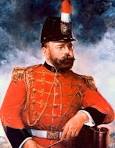
Image result for john philip sousa
JOHN PHILIP SOUSA

U.S. Marine Corps Band Master

John Phillip Sousa was born in Washington, D.C. on 6 November 1854, of a Portuguese father (Antonio Sousa, who had enlisted in the Marine Band in 1854) and a German mother (Elizabeth Trinkhouse Sousa). He began his musical education at the age of six in Washington, D.C., under Professor John Esputa and G.F. Benkert, and later studied at Philadelphia, Pennsylvania. At the age of 11, he first appeared as violin soloist. He began his career in the United States Marine Band at the age of 13, serving as an apprentice "boy" who had enlisted to receive instruction "in the trade or mystery of a musician." At 15, he was teaching harmony. Prior to his being appointed Leader of the Marine Band, he directed various theatrical and operatic companies.

The records of Marine Corps Headquarters show the following enlistments of John Philip Sousa; 9 June 1868 to 31 December 1871; 8 July 1872 to 18 May 1875; 1 October 1880 to 30 September 1885; 2 October 1885 to 1 October 1890; and 2 October 1890 to 30 July 1892.

On 1 January 1879, John Philip Sousa married Miss Jan Van M. Bellis, a singer of Philadelphia, appearing with the company of which he was director.

Sousa became leader of the Marine Band on 1 October 1880. The Marine Band made its first concert tour of the United States, visiting the eastern and middle states in 1891, and the Pacific coast in 1892. These tours gave the people of the United States an excellent opportunity to know John Philip Sousa, and to hear the United States Marine Band.

Sousa's personality, his musical and executive ability were instrumental in making the Marine Band a familiar and popular musical organization to residents and visitors of the Nation's Capitol. During the twelve years Sousa served as Leader, the Marine Band played at open air concerts at the White House Grounds, at the Capitol Plaza, state dinners, receptions at the White House, diplomatic and other public affairs.

In November 1889, the Marine Band, under Sousa, furnished the music on the occasion of the "Centennial Celebration of the Ratification of the Constitution of the United States by North Carolina" at Fayetteville, North Carolina. In their second appearance in North Carolina, dedicating the "Mechlenburg Declaration of Independence," the Marine Band, under Sousa, opened the ceremonies with the "Star Spangled Banner" and as an encore to each number on the program, the Band played "Dixie" which was "received with wild acclaim."

During his service with the U.S. Marine Band, Sousa received the praise of five Presidents: Rutherford B. Hayes, James A. Garfield, Chester A. Arthur, Grover Cleveland, and Benjamin Harrison. On 30 July 1892, he resigned from the Marine Band in order to organize a band of his own.

In his book, Marching Along, Sousa gives accounts of the activities of the Marine Band as well as those of the newly organized band of his own. Sousa, the "March King," received decorations from several countries in honor of his genius as a composer and as a band leader, among them were the Victorian Order (British), the Grand Diploma of Honor of the Academy of Heinhault (Belguim), the French decoration of Palms of the French Academy of Music, which offered an officership of public instruction in France. He contributed over 100 marches, about 10 light operas, several waltzes and overtures. Among the most famous of his marches are: "The Stars and Stripes Forever," "Semper Fidelis," "Washington Post," "Liberty Bell," "High School Cadets," "Invincible Eagle," "El Capitan," "The Thunderer," "Presidential Polonaise," "Manhattan Beach," "Yorktown Centennial," "Hands Across the Sea," "Man Behind the Gun," "King Cotton," "Bullets and Bayonets," "Boy Scouts of America," "Liberty Loan March," "Naval Reserve March," "Sabre and Spurs March," and "On the Campus March."

In 1917, Sousa was assigned to the Naval Training Station at Great Lakes, Illinois, in the capacity of musical director, and received the rank of Lieutenant Commander, USNR. He gave a great many concerts during World War I in behalf of the Liberty Loan Drives.

Upon the request of the officers of the United States Marine Corps who had served during the Boxer Rebellion in North China in 1900, Sousa composed a march, "The Royal Welch Fusiliers," to commemorate their association with the British regiment. In June 1930, Sousa attended the ceremony at Tidworth, England, where a "beautifully bound score of the march" was formally presented to the Royal Welch Fusiliers (the oldest regiment in Wales) to perpetuate the friendship of the regiment with the United States Marine Corps.

He also composed the march "The George Washington BiCentennial March" in 1930 (published by the Sam Fox Publishing Company in 1932) in honor of the 200th birthday anniversary of George Washington.

His last appearance before the Marine Band was on the occasion of the Carabao Wallow of 1932 at Washington, D.C. The Marine Band furnished the music for the big event. Sousa, as a distinguished guest, arose from the speaker's table, took Captain Taylor Branson's place on the podium, and conducted the Marine Band in the stirring strains of "The Stars and Stripes Forever." It is said that no band ever played with so much spirit, and that tears trickled down the cheeks of various members of the band as well as those of the audience.

John Philip Sousa died on 6 March 1932 at Reading, Pennsylvania, in his 78th year. His body was brought to Washington, D.C., the city of his birth and triumphs and lay in state in the band hall of the Marine Barracks. On Thursday, 10 March, two companies of Marines and Sailors, the Marine Band, and honorary pallbearers from the Army, Navy, and Marine Corps headed the funeral cortege from the Marine Barracks to Congressional Cemetery in Southeast Washington. In Washington, D.C., on 9 December 1939, the new Pennsylvania Avenue Bridge across the Eastern Branch of the Potomac River, was dedicated as a memorial to the great Washington composer and bandmaster, John Philip Sousa, and named Sousa Bridge. The Marine Band rendered his famous marches at this dedication.

Friday, September 9, 2016

Image result for marines fighting on peleliu
Peleliu <> 72 years ago

Noah H. Belew Was There

The Battle of Peleliu, codenamed Operation Stalemate II by the United States, was fought between the United States and the Empire of Japan in the Pacific Theater of World War II, from September to November 1944 on the island of Peleliu (in present-day Palau). U.S. Marines of the First Marine Division, fought to capture an airstrip on the small coral island. This battle was part of a larger offensive campaign known as Operation Forager, which ran from June to November 1944 in the Pacific Theater of Operations.

Major General William Rupertus, (USMC commander of 1st Marine Division) predicted the island would be secured within four days. However, because of Japan's well-crafted fortifications and stiff resistance, the battle lasted more than two months. In the United States, this was a controversial battle because of the island's questionable strategic value and the high casualty rate, which exceeded that of all other amphibious operations during the Pacific War. The National Museum of the Marine Corps called it "the bitterest battle of the war for the Marines".

Saturday, July 23, 2016

Image result for marine corps hymn bagpipes
The History of The Marines' Hymn


Following the war with the Barbary Pirates in 1805, when Lieutenant Presely N. O'Bannon and his small force of Marines participated in the capture of Derne and hoisted the American flag for the first time over a fortress of the Old World, the Colors of the Corps was inscribed with the words: "To the Shores of Tripoli." After the Marines participated in the capture and occupation of Mexico City and the Castle of Chapultepec, otherwise known as the "Halls of Montezuma," the words on the Colors were changed to read: "From the Shores of Tripoli to the Halls of Montezuma." Following the close of the Mexican War came the first verse of the Marines' Hymn, written, according to tradition, by a Marine on duty in Mexico. For the sake of euphony, the unknown author transposed the phrases in the motto on the Colors so that the first two lines of the Hymn would read: "From the Halls of Montezuma, to the Shores of Tripoli."

A serious attempt to trace the tune of the Marines' Hymn to its source is revealed in correspondence between Colonel A.S. McLemore, USMC, and Walter F. Smith, second leader of the Marine Band. Colonel McLemore wrote: 

"Major Richard Wallach, USMC, says that in 1878, when he was in Paris, France, the aria to which the Marines' Hymn is now sung was a very popular one." The name of the opera and a part of the chorus was secured from Major Wallach and forwarded to Mr. Smith, who replied: "Major Wallach is to be congratulated upon a wonderfully accurate musical memory, for the aria of the Marine Hymn is certainly to be found in the opera, 'Genevieve de Brabant'. . .The melody is not in the exact form of the Marine Hymn, but is undoubtedly the aria from which it was taken. I am informed, however, by one of the members of the band, who has a Spanish wife, that the aria was one familiar to her childhood and it may, therefore, be a Spanish folk song."

In a letter to Major Harold F. Wirgman, USMC, John Philip Sousa says: "The melody of the 'Halls of Montezuma' is taken from Offenbach's comic opera, 'Genevieve de Brabant' and is sung by two gendarmes." Most people believe that the aria of the Marines' Hymn was, in fact, taken from "Genevieve de Brabant," an opera-bouffe (a farcical form of opera, generally termed musical comedy) composed by Jacques Offenbach, and presented at the Theatre de Bouffes Parisians, Paris, on 19 November 1859.

Offenbach was born in Cologne, Germany, 21 June 1819 and died 5 October 1880. He studied music from an early age and in 1838 entered the Paris Conservatoire as a student. In 1834, he was admitted as a violoncellist to the "Opera Comique" and soon attained much popularity with Parisian audiences. He became conductor of the Theatre Francais in 1847 and subsequently leased the Theatre Comte, which he reopened as the Bouffes-Parisians. Most of his operas are classified as comic (light and fanciful) and include numerous popular productions, many of which still hold a high place in European and American countries.

Every campaign the Marines have taken part in gives birth to an unofficial verse. For example, the following from Iceland:
"Again in nineteen forty-one
We sailed a north'ard course
And found beneath the midnight sun,
The Viking and the Norse.
The Iceland girls were slim and fair,
And fair the Iceland scenes,
And the Army found in landing there,
The United States Marines."
Copyright ownership of the Marines' Hymn was vested in the United States Marine Corps per certificate of registration dated 19 August 1891, but it is now in the public domain. In 1929, the Commandant of the Marine Corps authorized the following verses of the Marines' Hymn as the official version:

"From the Halls of Montezuma
to the Shores of Tripoli,
We fight our country's battles
On the land as on the sea.
First to fight for right and freedom,
And to keep our honor clean,
We are proud to claim the title
of United States Marine.

"Our flag's unfurl'd to every breeze
From dawn to setting sun;
We have fought in every clime and place
Where we could take a gun.
In the snow of far-off northern lands
And in sunny tropic scenes,
You will find us always on the job
The United States Marines.

"Here's health to you and to our Corps
Which we are proud to serve;
In many a strife we've fought for life
And never lost our nerve.
If the Army and the Navy
Ever look on Heaven's scenes,
They will find the streets are guarded
By United States Marines."

On 21 November 1942, the Commandant of the Marine Corps approved a change in the words of the fourth line, first verse, to read, "In the air, on land, and sea." 

Ex-Gunnery Sergeant H.L. Tallman, veteran observer in Marine Corps Aviation who participated in many combat missions with Marine Corps Aviation over the Western Front in World War I, first proposed the change at a meeting of the First Marine Aviation Force Veterans Association in Cincinnati, Ohio.

Many interesting stories have been associated with the Marines' Hymn. One of the best was published in the Stars and Stripes, the official newspaper of the American Expeditionary Force, under date of 16 August 1918.

"A wounded officer from among the gallant French lancers had just been carried into a Yankee field hospital to have his dressing changed. He was full of compliments and curiosity about the dashing contingent that fought at his regiment's left.

"A lot of them are mounted troops by this time, he explained, for when our men would be shot from their horses, these youngsters would give one running jump and gallop ahead as cavalry. I believe they are soldiers from Montezuma. At least, when they advanced this morning, they were all singing "From the Halls of Montezuma to the Shores of Tripoli."

The Marines' Hymn has been sung and played wherever U.S. Marines have landed, and today is recognized as one of the foremost military service songs.

Tuesday, July 5, 2016

Image result for korean war ends
Armistice ends the Korean War

July 27, 1953
After three years of a bloody and frustrating war, the United States, the People’s Republic of China, North Korea, and South Korea agree to an armistice, bringing the Korean War to an end. The armistice ended America’s first experiment with the Cold War concept of “limited war.” 

The Korean War began on June 25, 1950, when communist North Korea invaded South Korea. Almost immediately, the United States secured a resolution from the United Nations calling for the military defense of South Korea against the North Korean aggression. In a matter of days, U.S. land, air, and sea forces had joined the battle. The U.S. intervention turned the tide of the war, and soon the U.S. and South Korean forces were pushing into North Korea and toward that nation’s border with China. In November and December 1951, hundreds of thousands of troops from the People’s Republic of China began heavy assaults against the American and South Korea forces. The war eventually bogged down into a battle of attrition. In the U.S. presidential election of 1952, Republican candidate Dwight D. Eisenhower strongly criticized President Harry S. Truman’s handling of the war. After his victory, Eisenhower adhered to his promise to “go to Korea.” His trip convinced him that something new was needed to break the diplomatic logjam at the peace talks that had begun in July 1951. Eisenhower began to publicly hint that the United States might make use of its nuclear arsenal to break the military stalemate in Korea. He allowed the Nationalist Chinese government on Taiwan to begin harassing air raids on mainland China. The president also put pressure on his South Korean ally to drop some of its demands in order to speed the peace process. 

Whether or not Eisenhower’s threats of nuclear attacks helped, by July 1953 all sides involved in the conflict were ready to sign an agreement ending the bloodshed. The armistice, signed on July 27, established a committee of representatives from neutral countries to decide the fate of the thousands of prisoners of war on both sides. It was eventually decided that the POWs could choose their own fate–stay where they were or return to their homelands. A new border between North and South Korea was drawn, which gave South Korea some additional territory and demilitarized the zone between the two nations. The war cost the lives of millions of Koreans and Chinese, as well as over 50,000 Americans. It had been a frustrating war for Americans, who were used to forcing the unconditional surrender of their enemies. Many also could not understand why the United States had not expanded the war into China or used its nuclear arsenal. As government officials were well aware, however, such actions would likely have prompted World War III.