Tuesday, May 29, 2007

D-Day in Europe
63 years ago


June 1944 was a major turning point of World War II, particularly in Europe. Although the initiative had been seized from the Germans some months before, so far the western Allies had been unable to mass sufficient men and material to risk an attack in northern Europe.

By mid-1944 early mobilization of manpower and resources in America was beginning to pay off. Millions of American men had been trained, equipped, and welded into fighting and service units. American industrial production had reached its wartime peak late in 1943. While there were still critical shortages -- in landing craft, for instance -- production problems were largely solved, and the Battle of the Atlantic had been won. Ever increasing streams of supplies from the United States were reaching anti-Axis fighting forces throughout the world.

By the beginning of June 1944, the United States and Great Britain had accumulated in the British Isles the largest number of men and the greatest amount of materiel ever assembled to launch and sustain an amphibious attack. Strategic bombing of Germany was reaching its peak. In May 1943, the Combined Chiefs of Staff had given high priority to a Combined Bomber Offensive to be waged by the Royal Air Force and the U.S. Army Air Forces. By late summer 1943, Allied bombers were conducting round-the-clock bombardment of German industry and communications. In general, British planes bombed by night and American planes bombed by day. Whereas an air raid by 200 planes had been considered large in June 1943, the average strike a year later was undertaken by 1,000 heavy bombers.

After considerable study strategists determined to make the cross-channel attack on the beaches of Normandy east of the Cherbourg Peninsula. Early objectives of the operation were the deep-water ports at Cherbourg and at Brest in Brittany.

Three months before D-Day, a strategic air campaign was inaugurated to pave the way for invasion by restricting the enemy's ability to shift reserves. French and Belgian railways were crippled, bridges demolished in northwestern France, and enemy airfields within a 130-mile radius of the landing beaches put under heavy attack. Special attention was given to isolating the part of northwestern France bounded roughly by the Seine and Loire Rivers. The Allies also put into effect a deception plan to lead the Germans to believe that landings would take place farther north along the Pas de Calais.

Opposed to the Allies was the so-called Army Group B of the German Army, consisting of the Seventh Army in Normandy and Brittany, the Fifteenth Army in the Pas de Calais and Flanders, and the LXXXVIII Corps in Holland -- all under command of Field Marshal Erwin Rommel. Commander of all German forces in western Europe was Field Marshal von Rundstedt who, in addition to Group B, also had at his disposal Group G composed of the First and Nineteenth Armies. In all, Von Rundstedt commanded approximately fifty infantry and ten Panzer divisions in France and the Low Countries.

Despite unfavorable weather forecasts, General Eisenhower made the decision to attack on June 6, 1944. At 0200 that morning one British and two American airborne divisions were dropped behind the beaches in order to secure routes of egress from the beaches for the seaborne forces. After an intensive air and naval bombardment, assault waves of troops began landing at 0630. More than 5,000 ships and 4,000 ship-to-shore craft were employed in the landings. British forces on the left flank and U.S. forces on the right had comparatively easy going, but U.S. forces in the center (Omaha Beach) met determined opposition. Nevertheless, by nightfall of the first day, large contingents of three British, one Canadian, and three American infantry divisions, plus three airborne divisions, had a firm foothold on Hitler's "fortress Europe."
***
War in the Pacific <>
World War II
After Pearl Harbor the Japanese quickly gained control over a huge area of the Pacific, from the Phillipines to Burma to the Aleutians to the Solomons.

While the Japanese enjoyed the advantage of interior lines of communication, they had somewhat overextended themselves. Once the Allies became strong enough to threaten their perimeter from several directions, the advantage would be lost, since Japan did not have and could not produce enough planes and ships to defend in force at all points.

The turning point in the Pacific theatre came in mid-1942 with history's first great carrier battles. In the Coral Sea the U.S. Navy checked the Japanese. In the Battle of Midway it defeated them.

After the Battle of Midway, the Allies were able to launch a counter-offensive. The first stage of the offensive began with the Navy under Admiral Nimitz and Marine landings on Guadalcanal and nearby islands in the Solomons. At the same time, the Army under General MacArthur with Australian allies set out to take New Guinea's Papuan peninsula. After long, bloody struggles, both campaigns succeeded.

From this point on, Nimitz and MacArthur engaged in island-hopping campaigns that bypassed strongly-held islands to strike at the ememy's weak points. Campaigns against the Aleutians and Rabaul succeeded in stopping the Japanese advances and secured bases for Allied advances on Japan.

While MacArthur pushed along the New Guinea coast, preparing for his return to the Philippines, Nimitz crossed the central Pacific, via the Gilberts, Marshalls, Marianas, Carolines, and Palaus. Once the Marianas were taken, it would be possible to use them as bases from which the new long-range B-29 bombers could strike at the heart of Japan.

The advance through the Central Pacific got under way in November 1943 with the seizure of two islands, Tarawa and Makin in the Gilberts. Marines landed on Tarawa on November 21 and took the island in a four-day fight at a cost to the Marines of some 3,000 casualties. Army troops overwhelmed the small Japanese garrison on Makin between November 20 and 24, 1943.

During January and February 1944, Admiral Nimitz proceeded to positions in the central and western Marshalls. The principal islands taken were Kwajalein, which was invaded by an Army force on February 1, and the islands of Roi and Namur, which were invaded by Marines on February 3 and 6.

From Kwajalein a naval task force, moving west 340 miles with a regiment each of Marines and infantry, captured a Japanese air base on Engebi in the Eniwetok Atoll on February 17-19, 1944.

Meanwhile, on February 16, Nimitz had launched a massive carrier raid on Truk in the central Carolines, long considered Japan's key bastion in the central Pacific. This raid revealed that the Japanese had virtually abandoned Truk as a naval base, and a plan to assault that atoll in June was abandoned. Instead, Nimitz drew up plans for an invasion of the Marianas in June, to be followed in September by an advance into the western Carolines.

Admiral Nimitz invaded the Marianas in June 1944. Amphibious assaults were made on Saipan on June 15, on Guam on July 20, and on Tinian on July 23, 1944. All three islands were strongly garrisoned by Japanese troops who contested every yard of ground.

Loss of Saipan precipitated a political crisis in Tokyo and brought about the fall of the Tojo Cabinet. The Japanese sallied forth to offer battle to the U.S. Pacific Fleet. They hastily reassembled their fleet from Biak and the Philippines and sailed north to defend the Marianas area, but lack of land-based air support made it impossible to surprise the U.S. naval contingents under Admiral Spruance.

In a massive air battle that took place on June 19, 4 days after landings on Saipan, the Japanese lost more than 400 planes to an American loss of less than 30. Stripped of carrier planes, the Japanese fleet fled westward, but American planes in pursuit were able to sink several vessels, including three carriers.

During this engagement, known as the Battle of the Philippine Sea, only three American ships were damaged. This victory paved the way for eventual success in the Marianas, and provided a demonstration of the interdependence of operations in the Southwest and Central Pacific Areas.

Capture of the Marianas brought Japan within reach of the Army Air Forces' huge new bomber, the B-29, which was able to make a nonstop flight of the 1,400 miles to Tokyo and back. Construction of airfields to accommodate B-29's began in the Marianas before the shooting had stopped, and in late November 1944 the strategic bombing of Japan began.

The last two major campaigns of the Pacific war -- Luzon and Okinawa -- were still to come. But Japan was essentially beaten. It was defenseless on the seas; its air force was gone; and its cities were being burned out by incendiary bombs. The atomic bombings of Hiroshima and Nagasaki on August 6 and 9 and the Soviet declaration of war on 8 August forced the leaders of Japan to recognize the inevitable.

On August 15, 1945, Emperor Hirohito announced Japan's surrender and ordered Japanese forces to lay down their arms. Since the war in Europe had already been won, V-J Day, September 2, 1945, marked the end of the greatest war in human history.

Thursday, May 24, 2007

Hurricane Season

In the 1940s and 1950s, while serving 20 years in the United States Marine Corps, I survived many Hurricanes that made landfall in North Carolina, and the Pacific island of Okinawa, where they were called Typhoons. At that time I don't remember being afraid of them to stay out of harm's way. Later about 20 years ago after moving to Northwest Panhandle (Pensacola Beach) of Florida, I became old enough and wise enough to get out of town and away from where they were forcast to come ashore from the Gulf of Mexico. Having excellent homeowners insurance, and three days before arrival time, I locked my home and loaded my car and head in the direction where it is not expected to go. I refer to it as "Lock and Load" from the Marine Corps days.

Forecasters expect busy hurricane season on East Coast this year. Government forecasters say people living along the East and Gulf coasts need to be ready for a busier-than-normal hurricane season.

National Weather Service forecasters say they expect 13 to 17 tropical storms, with seven to ten of them becoming hurricanes.

The forecast follows that of two other leading storm experts in anticipating a busy season.

The National Oceanic and Atmosphere Administration says the likelihood of above-normal hurricane activity is 75 percent.

June first is the official beginning of hurricane season, and it ends November 30th.

History shows hurricanes are not rising
In September 1813, a major hurricane destroyed US gunboats and ships that were defending St Mary's, Georgia, from the British. Fifty sailors drowned.

In a letter to the US secretary of the navy, the commodore of the naval task force wrote that a privateer named Saucy Jack had been deposited so high on the marshes that the sea must have risen nearly 6 metres above its low water mark. Other letters of the time accurately described the passage of the eye of the storm and the timing of events.

Such historical records are proving invaluable to researchers trying to understand long-term patterns in the frequency and intensity of the hurricanes that lash the US mainland. Last week, Isabel became the 15th hurricane to strike since 1990, feeding dire predictions that hurricanes are on the increase.

But a historical analysis completed six weeks ago, combined with sophisticated computer models and modern hurricane-monitoring technology, has confirmed there is no such trend. Instead, hurricanes in the Atlantic come and go in cycles lasting a few decades.

While that is good news for some, it is also a warning for coastal communities that may have seen no storms for a generation or more.

Shipping logs
To forecast hurricane intensities, predict seasonal and climatic patterns of storms, and issue risk assessments that influence building regulations and house insurance premiums, scientists rely on a database of tropical storms and hurricanes maintained by the National Hurricane Center in Miami, Florida - part of the National Oceanic and Atmospheric Administration (NOAA).
But the database, which contains details of storms blowing across the Atlantic Ocean, the Gulf of Mexico and the Caribbean Sea, is full of both systematic and random errors, says Chris Landsea, the NOAA researcher who is leading the hurricane re-analysis project. "When this database was put together in the 1960s, they didn't spend a lot of time getting details right on the track or the intensity [of hurricanes]."


The first efforts to rectify these errors were led by Jose Fernandez-Partagas, a researcher at the University of Miami. He worked in near-total obscurity, poring over newspaper reports and shipping logs to uncover previously undocumented tropical cyclones from the mid-1800s to the early 1900s.

After his death in 1997, Landsea and his colleagues took over the task, instituting a systematic search of historical records, including diaries, newspapers, letters, county records, and popular news magazines of the time, such as Niles' Weekly Register. Such records provide data mostly about a storm's location and time of landfall, and the extent of damage.

But crucial data about wind speeds and atmospheric pressure can be gleaned from shipping logs. Sailors used the systematic method known as the Beaufort scale to estimate wind speeds by looking at the impact of wind on their sails. And by the late 1800s, many ships were carrying barometers. From the pressure readings, researchers can estimate a storm's maximum wind speed. "We are able to use methods that are common today for storms 100 years old," says Landsea.

Cyclical pattern
Another crucial aspect of hurricanes that hit land is the storm surge - the exceptionally high water levels on the coast that can cause flooding inland. Reports such as the location of the Saucy Jack high on the marshes allow researchers to estimate the storm surge values.


"Sometimes watermarks are available," says Landsea's colleague Al Sandrik of the NOAA's National Weather Service in Jacksonville, Florida. "For example, we have pictures of the storm surge on Newcastle Street in Brunswick, Georgia, which, I believe, is the earliest picture of a storm surge ever taken." That was on 2 October 1898.

Based on such observations, the researchers have made over 5000 changes to the hurricane database for the years 1851 to 1910. The new data shows a cyclical pattern of hurricane activity that repeats every few decades.

The 1850s to mid-1860s were quiet, followed by an intense period from the late 1860s to 1900, with five seasons of 10 or more hurricanes. The year 1886 was the busiest season on record in the US, with seven hurricanes hitting the coast. And after a lull, the storms raged again in the 1930s, 40s and 50s.

"It does confirm there are cycles of activity, rather than long-term trends towards more or stronger storms," says Landsea. That database also reveals that states such as Georgia that were largely spared during the 20th century remain at risk.

"If we take a closer look at the 19th century, we had major landfalls in 1854, 1893, and 1898," says Sandrik. "So this is significant for the people in the area."

GPS receiver
The project is also changing our thinking about recent hurricanes. For instance, hurricane Andrew, which devastated Florida in 1992, was thought to be a category 4 hurricane, defined as having a maximum wind speed of between 210 and 249 kilometres per hour at sea level.


To gauge the strength of Andrew, researchers assumed maximum wind speeds at sea level were 75 per cent those measured by planes flying through the storm at 3000 metres. But since 1997, researchers have been able to get more reliable measurements by parachuting a device called a dropwindsonde into the windiest parts of the hurricane.

The instrument is fitted with a GPS receiver and records pressure, temperature and wind data every five metres. Such measurements have revealed that the wind speed at sea level is actually 90 per cent of the speeds recorded at 3000 metres. So Andrew's maximum wind speed has been raised from 230 to 264 kilometres per hour, making it one of a handful of category 5 hurricanes to have struck the US.

Storm surge
NOAA researchers are not the only ones re-analysing hurricanes. Kwok Fai Cheung of the University of Hawaii at Manoa, in Honolulu, has started using newly developed hurricane-forecasting models to simulate storms that have hit the coast of New England in the past 500 years.


Cheung uses historical records to get the location of each hurricane, its size as indicated by the damage it caused on the ground, and the storm surge values. He plugs the data into his computer, literally running the model backwards. "I adjust the central pressure, which is the intensity of the hurricane, until my calculated storm surge matches the recorded value," says Cheung. That way, he is able to recreate the hurricane that caused the flooding.

These re-analysis projects confirm that hurricanes are not increasing in numbers and intensity. But that is no cause for complacency - in fact, quite the opposite.

"The multi-decadal cycle is reaching a point where we are going to be seeing an increase in hurricane activity," says Sandrik. "People wanting to live and build in coastal areas need to take into account the fact that a more active period."


Friday, May 18, 2007

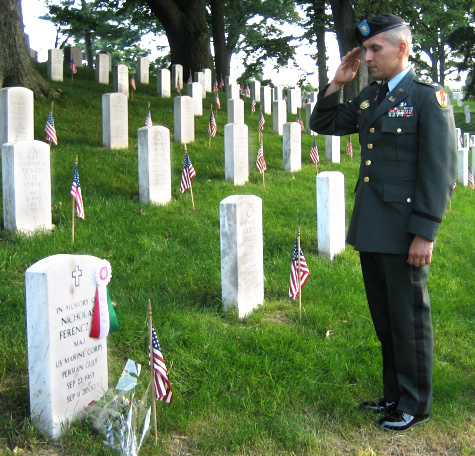
Memorial Day

Since the last Memorial Day, we have had 1,835 brave military American men and women killed in George W. Bush Iraq Civil War. As of May 26, 2007, a total of 3,455 American heroes have been killed in that war. We also have had 25,549 American casulties in Iraq, some with no legs, arms, eyes, etc., a war that is not winnable under Bush, the lunatic leadership. It should never had been fought.

Memorial Day, originally called Decoration Day, is a day of remembrance for those who have died in our nation's service. There are many stories as to its actual beginnings, with over two dozen cities and towns laying claim to being the birthplace of Memorial Day. There is also evidence that organized women's groups in the South were decorating graves before the end of the Civil War: a hymn published in 1867, "Kneel Where Our Loves are Sleeping" by Nella L. Sweet carried the dedication "To The Ladies of the South who are Decorating the Graves of the Confederate Dead" (Source: Duke University's Historic American Sheet Music, 1850-1920). While Waterloo N.Y. was officially declared the birthplace of Memorial Day by President Lyndon Johnson in May 1966, it's difficult to prove conclusively the origins of the day. It is more likely that it had many separate beginnings; each of those towns and every planned or spontaneous gathering of people to honor the war dead in the 1860's tapped into the general human need to honor our dead, each contributed honorably to the growing movement that culminated in Gen Logan giving his official proclamation in 1868. It is not important who was the very first, what is important is that Memorial Day was established. Memorial Day is not about division. It is about reconciliation; it is about coming together to honor those who gave their all.

Memorial Day was officially proclaimed on 5 May 1868 by General John Logan, national commander of the Grand Army of the Republic, in his General Order No. 11, and was first observed on 30 May 1868, when flowers were placed on the graves of Union and Confederate soldiers at Arlington National Cemetery. The first state to officially recognize the holiday was New York in 1873. By 1890 it was recognized by all of the northern states. The South refused to acknowledge the day, honoring their dead on separate days until after World War I (when the holiday changed from honoring just those who died fighting in the Civil War to honoring Americans who died fighting in any war). It is now celebrated in almost every State on the last Monday in May (passed by Congress with the National Holiday Act of 1971 (P.L. 90 - 363) to ensure a three day weekend for Federal holidays), though several southern states have an additional separate day for honoring the Confederate war dead: January 19 in Texas, April 26 in Alabama, Florida, Georgia, and Mississippi; May 10 in South Carolina; and June 3 (Jefferson Davis' birthday) in Louisiana and Tennessee.

In 1915, inspired by the poem "In Flanders Fields," Moina Michael replied with her own poem:
We cherish too, the Poppy red,
That grows on fields where valor led,
It seems to signal to the skies
That blood of heroes never dies.
She then conceived of an idea to wear red poppies on Memorial day in honor of those who died serving the nation during war. She was the first to wear one, and sold poppies to her friends and co-workers with the money going to benefit servicemen in need. Later a Madam Guerin from France was visiting the United States and learned of this new custom started by Ms.Michael and when she returned to France, made artificial red poppies to raise money for war orphaned children and widowed women. This tradition spread to other countries. In 1921, the Franco-American Children's League sold poppies nationally to benefit war orphans of France and Belgium. The League disbanded a year later and Madam Guerin approached the VFW for help. Shortly before Memorial Day in 1922 the VFW became the first veterans' organization to nationally sell poppies. Two years later their "Buddy" Poppy program was selling artificial poppies made by disabled veterans. In 1948 the US Post Office honored Ms Michael for her role in founding the National Poppy movement by issuing a red 3 cent postage stamp with her likeness on it.

Traditional observance of Memorial day has diminished over the years. Many Americans nowadays have forgotten the meaning and traditions of Memorial Day. At many cemeteries, the graves of the fallen are increasingly ignored, neglected. Most people no longer remember the proper flag etiquette for the day. While there are towns and cities that still hold Memorial Day parades, many have not held a parade in decades. Some people think the day is for honoring any and all dead, and not just those fallen in service to our country.
There are a few notable exceptions. Since the late 50's on the Thursday before Memorial Day, the 1,200 soldiers of the 3d U.S. Infantry place small American flags at each of the more than 260,000 gravestones at Arlington National Cemetery. They then patrol 24 hours a day during the weekend to ensure that each flag remains standing. In 1951, the Boy Scouts and Cub Scouts of St. Louis began placing flags on the 150,000 graves at Jefferson Barracks National Cemetery as an annual Good Turn, a practice that continues to this day. More recently, beginning in 1998, on the Saturday before the observed day for Memorial Day, the Boys Scouts and Girl Scouts place a candle at each of approximately 15,300 grave sites of soldiers buried at Fredericksburg and Spotsylvania National Military Park on Marye's Heights (the Luminaria Program). And in 2004, Washington D.C. held its first Memorial Day parade in over 60 years.

To help re-educate and remind Americans of the true meaning of Memorial Day, the "National Moment of Remembrance" resolution was passed on Dec 2000 which asks that at 3 p.m. local time, for all Americans "To voluntarily and informally observe in their own way a Moment of remembrance and respect, pausing from whatever they are doing for a moment of silence or listening to 'Taps."

The Moment of Remembrance is a step in the right direction to returning the meaning back to the day. What is needed is a full return to the original day of observance. Set aside one day out of the year for the nation to get together to remember, reflect and honor those who have given their all in service to their country.

But what may be needed to return the solemn, and even sacred, spirit back to Memorial Day is for a return to its traditional day of observance. Many feel that when Congress made the day into a three-day weekend in with the National Holiday Act of 1971, it made it all the easier for people to be distracted from the spirit and meaning of the day. As the VFW stated in its 2002 Memorial Day address: "Changing the date merely to create three-day weekends has undermined the very meaning of the day. No doubt, this has contributed greatly to the general public's nonchalant observance of Memorial Day."

On January 19, 1999 Senator Inouye introduced bill S 189 to the Senate which proposes to restore the traditional day of observance of Memorial Day back to May 30th instead of "the last Monday in May". On April 19, 1999 Representative Gibbons introduced the bill to the House (H.R. 1474). The bills were referred the Committee on the Judiciary and the Committee on Government Reform.

To date, there has been no further developments on the bill. Please write your Representative and your Senators, urging them to support these bills. You can also contact Mr. Inouye to let him know of your support.

Thursday, May 17, 2007

USMC Aviation History

Marine 1st Lt. Alfred A. Cunningham, Naval Aviator No. 5 and the first Marine pilot.

The Marine Corps has forged a winning team with its air power and ground forces.

One hundred years ago, Orville and Wilbur Wright took turns guiding their wood and fabric Flyer over the dunes of Kitty Hawk, N.C. Just over five years later, the Navy had made up its mind to acquire flying machines. Unfortunately, the then-Secretary of the Navy stated, "The department does not consider that the development of the aeroplane has progressed sufficiently at this time for use in the Navy."

The Navy persisted, and by 1912 had four aviators on its rolls. Aviation pioneer Glenn Curtiss was training pilots and developing flying boats here in San Diego. Daring pilots were making carrier landings and take-offs and learning to drop bombs on ships and trenches.

On May 22, 1912, Marine Corps 1st Lt. Alfred A. Cunningham reported for flight training. He soloed after only two hours and 40 minutes of instruction (in a Wright Bros. Model B-1), and became Naval Aviator No. 5. In his honor, May 22 has become the official "date of birth" of Marine Corps aviation.

When the United States joined World War I in 1917, the Marines Corps had just five aviators and 30 enlisted men, including Cunningham. At war’s end, Marine aviation included 282 officers and 2,180 enlisted men. Marine aviators won two Medals of Honor during World War I.

Marines learned close ground support while fighting rebels in Nicaragua, again earning awards for bravery, including the Medal of Honor for close air support.

The sudden immersion of the United States in World War II found the Marines on the front lines, defending Wake Island against a better-equipped, more-experienced Japanese force. Marine aviators led the attack in the famous Battle of Midway, an American victory despite high losses to pilots and aircraft. Marines ended World War II with 125 aces and eight Medals of Honor. The Marines’ F4-U Corsair had become famous as a symbol of Marine Corps ground support and air superiority in the Pacific.

The Marines continued their close relationship of air and ground forces in Korea, deploying jet aircraft and helicopters for the first time while still making excellent use of the legendary Corsair. The introduction of helicopters in combat increased mobility in rugged terrain and, combined with field hospitals, greatly reduced the number of combat deaths in the field.

The 1960s found Marines fighting communism in the swamps and jungles of Vietnam while at the same time pioneering America’s entry into space. The first U.S. combat troops brought into this Southeast Asian conflict, American Marines landed at Da Nang in 1965, supported by F-4B Phantom IIs and A-4D Skyhawks. From Hue to Chu Lai to Khe Sanh, Marines on the ground depended on their "Flying Leathernecks." And in 1962, Marine Corps Col. John Glenn became the first American astronaut to orbit the earth, a voyage lasting less than five hours. (In 1998, Glenn returned to space as the oldest American to do so, with 144 orbits over nine days.)

Marines have deployed to many exotic locations, from operations in Grenada and Panama to the protection of American Embassies under attack around the world, before being called upon in Operation Desert Storm, Operation Enduring Freedom, and, most recently, Operation Iraqi Freedom.

These operations were supported by USMC F/A-18 Hornets (refueled in flight by the Marine Corps's own KC-130 tankers), AV-8B Harriers, and squadrons of rotary-wing aircraft (including the CH-46, CH-53E, UH-1N and AH-1W).

As America moves into the 21st century, newer, more modern technology is moving into the air, with the tilt-wing MV-22 Osprey and Joint Strike Fighter concepts soon to join our armed forces. But, certainly, one thing that will never change is the United States Marine Corps partnership between those on the ground and those in the sky.