Thursday, January 14, 2016

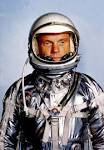
Image result for john glenn
An American orbits earth

                      1962
From Cape Canaveral, Florida, John Hershel Glenn Jr. is successfully launched into space aboard the Friendship 7 spacecraft on the first orbital flight by an American astronaut.

Glenn, a lieutenant colonel in the U.S. Marine Corps, was among the seven men chosen by the National Aeronautics and Space Administration (NASA) in 1959 to become America’s first astronauts. A decorated pilot, he flew nearly 150 combat missions during World War II and the Korean War. In 1957, he made the first nonstop supersonic flight across the United States, flying from Los Angeles to New York in three hours and 23 minutes.

Glenn was preceded in space by two Americans, Alan B. Shepard Jr. and Virgil I. “Gus” Grissom, and two Soviets, Yuri A. Gagarin and Gherman S. Titov. In April 1961, Gagarin was the first man in space, and his spacecraft Vostok 1 made a full orbit before returning to Earth. Less than one month later, Shepard was launched into space aboard Freedom 7 on a suborbital flight. In July, Grissom made another brief suborbital flight aboard Liberty Bell 7. In August, with the Americans still having failed to make an orbital flight, the Russians sprinted further ahead in the space race when Titov spent more than 25 hours in space aboard Vostok 2, making 17 orbits. As a technological power, the United States was looking very much second-rate compared with its Cold War adversary. If the Americans wanted to dispel this notion, they needed a multi-orbital flight before another Soviet space advance arrived.

It was with this responsibility in mind that John Glenn lifted off from the launch pad at Cape Canaveral at 9:47 a.m. on February 20, 1962. Some 100,000 spectators watched on the ground nearby and millions more saw it on television. After separating from its launching rocket, the bell-shaped Friendship 7 capsule entered into an orbit around Earth at a speed of about 17,500 miles per hour. Smoothing into orbit, Glenn radioed back, “Capsule is turning around. Oh, that view is tremendous.”

During Friendship 7‘s first orbit, Glenn noticed what he described as small, glowing fireflies drifting by the capsule’s tiny window. It was some time later that NASA mission control determined that the sparks were crystallized water vapor released by the capsule’s air-conditioning system. Before the end of the first orbit, a more serious problem occurred when Friendship 7‘s automatic control system began to malfunction, sending the capsule into erratic movements. At the end of the orbit, Glenn switched to manual control and regained command of the craft.

Toward the end of Glenn’s third and last orbit, mission control received a mechanical signal from the spacecraft indicating that the heat shield on the base of the capsule was possibly loose. Traveling at its immense speed, the capsule would be incinerated if the shield failed to absorb and dissipate the extremely high reentry temperatures. It was decided that the craft’s retrorockets, usually jettisoned before reentry, would be left on in order to better secure the heat shield. Less than a minute later, Friendship 7 slammed into Earth’s atmosphere.

During Glenn’s fiery descent back to Earth, the straps holding the retrorockets gave way and flapped violently by his window as a shroud of ions caused by excessive friction enveloped the spacecraft, causing Glenn to lose radio contact with mission control. As mission control anxiously waited for the resumption of radio transmissions that would indicate Glenn’s survival, he watched flaming chunks of retrorocket fly by his window. After four minutes of radio silence, Glenn’s voice crackled through loudspeakers at mission control, and Friendship 7 splashed down safely in the Atlantic Ocean. He was picked up by the USS destroyer Noa, and his first words upon stepping out of the capsule and onto the deck of the Noa were, “It was hot in there.” He had spent nearly five hours in space.

Glenn was hailed as a national hero, and on February 23 President John F. Kennedy visited him at Cape Canaveral. He later addressed Congress and was given a ticker-tape parade in New York City.

Out of a reluctance to risk the life of an astronaut as popular as Glenn, NASA essentially grounded the “Clean Marine” in the years after his historic flight. Frustrated with this uncharacteristic lack of activity, Glenn turned to politics and in 1964 announced his candidacy for the U.S. Senate from his home state of Ohio and formally left NASA. Later that year, however, he withdrew his Senate bid after seriously injuring his inner ear in a fall. In 1970, following a stint as a Royal Crown Cola executive, he ran for the Senate again but lost the Democratic nomination to Howard Metzenbaum. Four years later, he defeated Metzenbaum, won the general election, and went on to win reelection three times. In 1984, he unsuccessfully sought the Democratic nomination for president.

In early 1998, NASA announced it had approved Glenn to serve as a payload specialist on the space shuttle Discovery. On October 29, 1998, nearly four decades after his famous orbital flight, the 77-year-old Glenn became the oldest human ever to travel in space. During the nine-day mission, he served as part of a NASA study on health problems associated with aging. In 1999, he retired from his U.S. Senate seat after four consecutive terms in office, a record for the state of Ohio.

Wednesday, December 30, 2015

Image result for woman marine
HISTORY OF THE WOMEN MARINES

Since 1918, women have answered the
call to serve proudly in the United States Marines and the role of women in the Marines has evolved and expanded. All Women Marines can look forward to the future proudly, while never forgetting the women who made this future possible.
   In 1918, the Secretary of Navy allowed women to enroll for clerical duty in the Marine Corps. Officially, Opha Mae Johnson is credited as the first woman Marine. Johnson enrolled for service on August 13, 1918; during that year some 300 women first entered the Marine Corps to take over stateside clerical duties from battle-ready Marines who were needed overseas. The Marine Corps Women's Reserve was established in February 1943. June 12th, 1948, Congress passed the Women's Armed Services Integration Act and made women a permanent part of the regular Marine Corps.
   In 1950, the Women Reserves were mobilized for the Korean War and 2,787 women served proudly.


WOMEN MARINE MILESTONES

1918 - Pvt. Opha Mae Johnson becomes the first woman to enlist in the
Marine Corps Reserve

1943 - Colonel Ruth Cheney Streeter first Director of Women Marine Reservists
1943 - Captain Anne Lentz, first commissioned officer
1943 - Private Lucille McClarren first enlisted woman
1945 - First detachment of women Marines arrives in Hawaii for duty
1948 - Women's Armed Services Integration Act of 1948 authorized 100 regular Women Marine officers, 10 warrant officers, and 1,000 enlisted in a gradual build-up over a two year period with regular candidates coming from Reserve Women Marines on active duty or those with prior service not on active duty. (MC Res Hist, pp. 121-122).
1948 - Colonel. Katherine A. Towle first Director of Women Marines
1948 - First eight enlisted women were sworn in as regular Marines 
1949 - The 3d Recruit Battalion at Marine Corps Recruit Depot, Parris Island was reactivated for training non-veteran Women Marines. Women Marine recruits began arriving at Parris Island to form the first platoon of 50 Women Marine regulars to take a six—weeks' training course.
1949 - First black female Marines enlisted
1950 - The evening dress uniform for Marine Corps women officers was introduced for the first time by Colonel Katherine A. Towle at the Marine Corps birthday ball at the Sail Loft, Naval Gun Factory, Washington, D. C. The uniform was patterned after the full dress uniform of Marine officers. It will be worn by women Marina officers at all state and diplomatic functions. (ANAF Journal, 18 Nov 1950, p. 310).
1952 - On the ninth anniversary of the establishment of the Marine Corps Women's Reserve, the Lady Leathernecks participated for the first time in color raising ceremonies at the Marine Barracks, Washington, D. C. (ANAF Journal, 16 Feb 1952, p. 735).
1953 - Colonel Katherine A. Towle, Director of Women Marines, became the first woman line officer to retire from U. S. military service on reaching the mandatory retirement age of 55.
1953 - Lieutenant Colonel Julia E. Hamblet, 36, became the new Director of Women Marines, succeeding Colonel Katherine A. Towle.
1953 - Staff Sergeant Barbara Olive Barnwell First female Marine to be awarded the Navy and Marine Corps medal for heroism for saving a fellow Marine from drowning in the Atlantic Ocean in 1952.

1960 --
First woman Marine is promoted to E-9 — Master Gunnery Sergeant Geraldine M. Moran 
1961 -
The first woman Marine is promoted to Sergeant Major (E-9) — Bertha Peters Billeb 

Sunday, December 13, 2015


The "true meaning of Christmas" is a phrase with a long history in American pop culture. It first appears in the mid-19th century, and is often given vaguely religious overtones, suggesting that the "true meaning of Christmas" is the celebration of the Nativity of Christ. But in pop culture usage, overt religious references are mostly avoided, and the "true meaning" is taken to be a sort of introspective and benevolent attitude as opposed to the commercialization of Christmas which has been lamented since at least the 1850s. The poem A Visit From St. Nicholas (1822) helped popularize the tradition of exchanging gifts, and seasonal Christmas shopping began to assume economic importance. Harriet Beecher Stowe criticizes the commercialization of Christmas in her story "Christmas; or, the Good Fairy". An early expression of this sentiment using the phrase of "the true meaning" is found in The American magazine, vol. 28 (1889):
"to give up one's very self - to think only of others - how to bring the greatest happiness to others - that is the true meaning of Christmas"
The phrase is especially associated with Charles Dickens' A Christmas Carol  (1843), in which an old miser is taught the true meaning of Christmas by three ghostly visitors who review his past and foretell his future.

The topic was taken up by satirists such as Stan Freberg and Tom Lehrer during the 1950s and eventually by the influential TV special A Charlie Brown Christmas  first aired in 1965 and repeated every year since. Dr. Seuss' How the Grinch Stole Christmas! (1957) also illustrates the topos, and was very influential in the form of an animated TV special produced in 1966. The phrase and the associated morale became used as a trope in numerous Christmas films since the 1960s.

The phrase found its way into the 2003 Urbi et Orbi address of Pope John Paul II, "The crib and the tree: precious symbols, which hand down in time the true meaning of Christmas!"

Thursday, November 12, 2015

Image result for pearl harbor attack
Attack on Pearl Harbor

7 December 1941


The attack on Pearl Harbor was a surprise military strike by the Imperial Japanese Navy against the United States naval base at Pearl Harbor, in the United States Territory of Hawaii, on the morning of December 7, 1941. The attack led to the United States' entry into World War II.
Japan intended the attack as a preventive action to keep the U.S. Pacific Fleet from interfering with military actions the Empire of Japan planned in Southeast Asia against overseas territories of the United Kingdom, the Netherlands, and the United States. There were near-simultaneous Japanese attacks on the U.S.-held Philippines, Guam and Wake Island and on the British Empire in Malaya, Singapore, and Hong Kong. The attacks - from troop landings at Kota Bharu, Malaya, to the air attacks ranging geographically from Hong Kong to Pearl Harbor - took place over seven hours.

The attack commenced at 7:48 a.m. Hawaiian Time. The base was attacked by 353 Japanese fighter planes, bombers, and torpedo planes in two waves, launched from six aircraft carriers. All eight U.S. Navy battleships were damaged, with four sunk. All but Arizona were later raised, and six were returned to service and went on to fight in the war. The Japanese also sank or damaged three cruisers, three destroyers, an anti-aircraft training ship, and one minelayer. 188 U.S. aircraft were destroyed; 2,403 Americans were killed and 1,178 others were wounded. Important base installations such as the power station, shipyard, maintenance, and fuel and torpedo storage facilities, as well as the submarine piers and headquarters building (also home of the (intelligence section) were not attacked. Japanese losses were light: 29 aircraft and five midget submarines lost, and 64 servicemen killed. One Japanese sailor, Kazuo Sakamaki, was captured.

The attack came as a profound shock to the American people and led directly to the American entry into World War II in both the Pacific and European theaters. The following day, December 8, the United States declared war on Japan.[18] Domestic support for non-interventionism, which had been fading since the German attack on France in 1940, disappeared. Clandestine support of the United Kingdom (e.g., the Neutrality Patrol) was replaced by active alliance. Subsequent operations by the U.S. prompted Germany and Italy to declare war on the U.S. on December 11, which was reciprocated by the U.S. the same day.
From the 1950s, several writers alleged that parties high in the U.S. and British governments knew of the attack in advance and may have let it happen (or even encouraged it) with the aim of bringing America into war. However, this advance-knowledge conspiracy theory is rejected by mainstream historians.

There were numerous historical precedents for unannounced military action by Japan. However, the lack of any formal warning, particularly while negotiations were still apparently ongoing, led President Franklin D. Roosevelt to proclaim December 7, 1941, "a date which will live in infamy". Because the attack happened without a declaration of war and without explicit warning, the attack on Pearl Harbor was judged by the Tokyo Trials to be a war crimes.