Monday, March 10, 2014

Who Was St. Patrick?

Introduction 
St. Patrick, the patron saint of Ireland, is one of Christianity's most widely known figures. But for all his celebrity, his life remains somewhat of a mystery. Many of the stories traditionally associated with St. Patrick, including the famous account of his banishing all the snakes from Ireland, are false, the products of hundreds of years of exaggerated storytelling.

It is known that St. Patrick was born in Britain to wealthy parents near the end of the fourth century. He is believed to have died on March 17, around 460 A.D. Although his father was a Christian deacon, it has been suggested that he probably took on the role because of tax incentives and there is no evidence that Patrick came from a particularly religious family. At the age of 16, Patrick was taken prisoner by a group of Irish raiders who were attacking his family's estate. They transported him to Ireland where he spent six years in captivity. (There is some dispute over where this captivity took place. Although many believe he was taken to live in Mount Slemish in County Antrim, it is more likely that he was held in County Mayo near Killala.) During this time, he worked as a shepherd, outdoors and away from people. Lonely and afraid, he turned to his religion for solace, becoming a devout Christian. (It is also believed that Patrick first began to dream of converting the Irish people to Christianity during his captivity.)
After more than six years as a prisoner, Patrick escaped. According to his writing, a voice, which he believed to be God's spoke to him in a dream, telling him it was time to leave Ireland.

To do so, Patrick walked nearly 200 miles from County Mayo, where it is believed he was held, to the Irish coast. After escaping to Britain, Patrick reported that he experienced a second revelation - an angel in a dream tells him to return to Ireland as a missionary. Soon after, Patrick began religious training, a course of study that lasted more than 15 years. After his ordination as a priest, he was sent to Ireland with a dual mission: to minister to Christians already living in Ireland and to begin to convert the Irish. (Interestingly, this mission contradicts the widely held notion that Patrick introduced Christianity to Ireland.)

Tuesday, March 4, 2014

Attractions and Events
Pensacola, Florida
 
Visiting Pensacola is always a big event, because there's always something special going on! From our beautiful beaches, gorgeously preserved historic district, great dining and fine array of colleges, to impressive performing arts venues, amusement parks, a zoo and even a fly-away fun spot like the National Aviation Museum, Pensacola has something for everyone.

Mardi Gras Celebration - February

Boasting the 3rd largest Mardi Gras celebration in the country behind New Orleans, LA and Mobile, AL, the streets of Pensacola are filled with parades and revelry for 5 days each year during the Mardi Gras season. With parades in downtown Pensacola and on beautiful Pensacola Beach, there's something for everyone!

St. Patrick's Day - March

As to be expected, Irish eyes are smiling on Pensacola come St. Patrick's Day, with parties and celebrations taking place for kids of all ages all over the city – from the beach to the historic downtown area. Popular events include the McGuire's St. Patrick's Day 5K Run that starts and finishes at the acclaimed McGuire's Irish Pub.

Crawfish Festival - April

Celebrating the Cajun influence in the Pensacola community, the Crawfish Festival is one of the largest crawfish boils in the state, held at the waterfront in Bartram Park in downtown Pensacola. Throughout the three-day festival held in late April-early May, you'll enjoy some great music straight from the bayous of Louisiana.

Memorial Day Celebration - May

For many people, the summer officially begins on Memorial Day weekend. We think of it as a day to celebrate our many veterans, and with so many military bases nearby, we have no shortage of those we honor and remember. One of the must-see veteran's memorials is the Wall South, located in Veteran's Memorial Park.

Fiesta of Five Flags - June

One of the oldest and largest heritage festivals in Florida, the Fiesta of Five Flags is a 10-day annual celebration of the founding of Pensacola. In 1559, Spanish Conquistador, Don Tristan de Luna, established Pensacola as the first European settlement in the U.S. Since then, five different flags have flown over the city: Spanish, French, British, Confederate and American.

4th of July Celebration

One of the most spectacular 4th of July celebrations in the country can be found in downtown Pensacola at Sertoma's 4th of July Celebration. You can also hit Pensacola Beach, to see fireworks exploding dramatically over the Gulf of Mexico. There's simply no better place to celebrate our independence than with spectacle of fireworks overhead, soft sand crunching beneath your feet, and impromptu parties up and down the beach!

Blue Angels Air Show - July

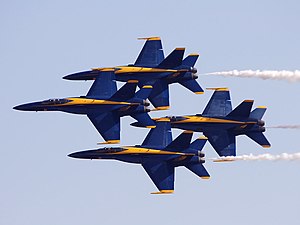
Get ready to witness exhilarating stunts and heart-stopping maneuvers at the Pensacola Beach Air Show. The Navy's flight demonstration team, the Blue Angels, along with civilian and other military aircraft perform aerial acrobatics over the Gulf of Mexico during a weekend of high-flying fun. Don't miss the Fall Homecoming Show at NAS Pensacola!

Seafood Festival - September

Held in historic Seville Square in downtown Pensacola each year, the Seafood Festival boasts a variety of dishes from 18 food vendors and over 180 arts and crafts vendors, making it one of the largest arts and crafts fairs in Northwest Florida. Also enjoy live musical performances by local and regional acts, cooking demonstrations, a 5Krun/walk, and more.

Great Gulfcoast Arts Festival - November

One of the most highly regarded and popular arts festivals held  in America, this three-day event and juried art show is held in  historic Seville Square the first weekend in November. Each year the Great Gulfcoast Arts Festival draws more than 200 of the nation's best painters, potters, sculptors, jewelers, graphic artists, craftsmen, mixed-media artists and more.

Pelican Drop - December

The historic streets of Downtown Pensacola are closed to host a New Year's celebration like no other.  A giant illuminated Pelican will be perched above the celebration on a 100-foot platform, descending at the stroke of midnight, amidst a fireworks extravaganza show.  A family oriented celebration with live entertainment, food, and a host of children's activities take over Downtown Pensacola.

Hotel Sponsored Events are denoted with asterisk

From food and art festivals, national holidays with local flair, to wonderful air shows of the highest caliber-there's certainly no shortage of fun events and attractions in Pensacola, Florida.

Saturday, March 1, 2014

Daylight Saving Time
9 March 2014

Early adoption in law


Daylight Saving Time has been used in the U.S. and in many European countries since World War I. At that time, in an effort to conserve fuel needed to produce electric power, Germany and Austria took time by the forelock, and began saving daylight at 11:00 p.m. on April 30, 1916, by advancing the hands of the clock one hour until the following October. Other countries immediately adopted this 1916 action: Belgium, Denmark, France, Italy, Luxembourg, Netherlands, Norway, Portugal, Sweden, Turkey, and Tasmania. Nova Scotia and Manitoba adopted it as well, with Britain following suit three weeks later, on May 21, 1916. In 1917, Australia and Newfoundland began saving daylight.

The plan was not formally adopted in the U.S. until 1918. 'An Act to preserve daylight and provide standard time for the United States' was enacted on March 19, 1918.It both established standard time zones and set summer DST to begin on March 31, 1918. Daylight Saving Time was observed for seven months in 1918 and 1919. After the War ended, the law proved so unpopular (mostly because people rose earlier and went to bed earlier than people do today) that it was repealed in 1919 with a Congressional override of President Wilson's veto. Daylight Saving Time became a local option, and was continued in a few states, such as Massachusetts and Rhode Island, and in some cities, such as New York, Philadelphia, and Chicago.

During World War II, President Franklin Roosevelt instituted year-round Daylight Saving Time, called "War Time," from February 9, 1942 to September 30, 1945. From 1945 to 1966, there was no federal law regarding Daylight Saving Time, so states and localities were free to choose whether or not to observe Daylight Saving Time and could choose when it began and ended. This understandably caused confusion, especially for the broadcasting industry, as well as for railways, airlines, and bus companies. Because of the different local customs and laws, radio and TV stations and the transportation companies had to publish new schedules every time a state or town began or ended Daylight Saving Time.

On January 4, 1974, President Nixon signed into law the Emergency Daylight Saving Time Energy Conservation Act of 1973. Then, beginning on January 6, 1974, implementing the Daylight Saving Time Energy Act, clocks were set ahead. On October 5, 1974, Congress amended the Act, and Standard Time returned on October 27, 1974. Daylight Saving Time resumed on February 23, 1975 and ended on October 26, 1975.

Inconsistent use in the U.S.

In the early 1960s, observance of Daylight Saving Time was quite inconsistent, with a hodgepodge of time observances, and no agreement about when to change clocks. The Interstate Commerce Commission, the nation's timekeeper, was immobilized, and the matter remained deadlocked. Many business interests were supportive of standardization, although it became a bitter fight between the indoor and outdoor theater industries. The farmers, however, were opposed to such uniformity. State and local governments were a mixed bag, depending on local conditions.

Efforts at standardization were encouraged by a transportation industry organization, the Committee for Time Uniformity. They surveyed the entire nation, through questioning telephone operators as to local time observances, and found the situation was quite confusing. Next, the Committee's goal was a strong supportive story on the front page of the New York Times. Having rallied the general public's support, the Time Uniformity Committee's goal was accomplished, but only after discovering and disclosing that on the 35-mile stretch of highway (Route 2) between Moundsville, W.V., and Steubenville, Ohio, every bus driver and his passengers had to endure seven time changes!

The Uniform Time Act

By 1966, some 100 million Americans were observing Daylight Saving Time based on their local laws and customs. Congress decided to step in and end the confusion, and to establish one pattern across the country. The Uniform Time Act of 1966 (15 U.S. Code Section 260a) signed into Public Law 89-387 on April 12, 1966, by President Lyndon Johnson, created Daylight Saving Time to begin on the last Sunday of April and to end on the last Sunday of October. Any State that wanted to be exempt from Daylight Saving Time could do so by passing a state law.

The Uniform Time Act of 1966 established a system of uniform (within each time zone) Daylight Saving Time throughout the U.S. and its possessions, exempting only those states in which the legislatures voted to keep the entire state on standard time.

In 1972, Congress revised the law to provide that, if a state was in two or more time zones, the state could exempt the part of the state that was in one time zone while providing that the part of the state in a different time zone would observe Daylight Saving Time. The Federal law was amended in 1986 to begin Daylight Saving Time on the first Sunday in April.

Under legislation enacted in 1986, Daylight Saving Time in the U.S. began at 2:00 a.m. on the first Sunday of April and ended at 2:00 a.m. on the last Sunday of October.

The Energy Policy Act of 2005 extended Daylight Saving Time in the U.S. beginning in 2007, though Congress retained the right to revert to the 1986 law should the change prove unpopular or if energy savings are not significant. Going from 2007 forward, Daylight Saving Time in the U.S.
  • begins at 2:00 a.m. on the second Sunday of March and
  • ends at 2:00 a.m. on the first Sunday of November
In most of the countries of Western Europe, including the countries that are members of the EU, Daylight Saving Time:
  • begins at 1:00 a.m. GMT on the last Sunday of March and
  • ends at 1:00 a.m. GMT on the last Sunday of October

Friday, February 28, 2014